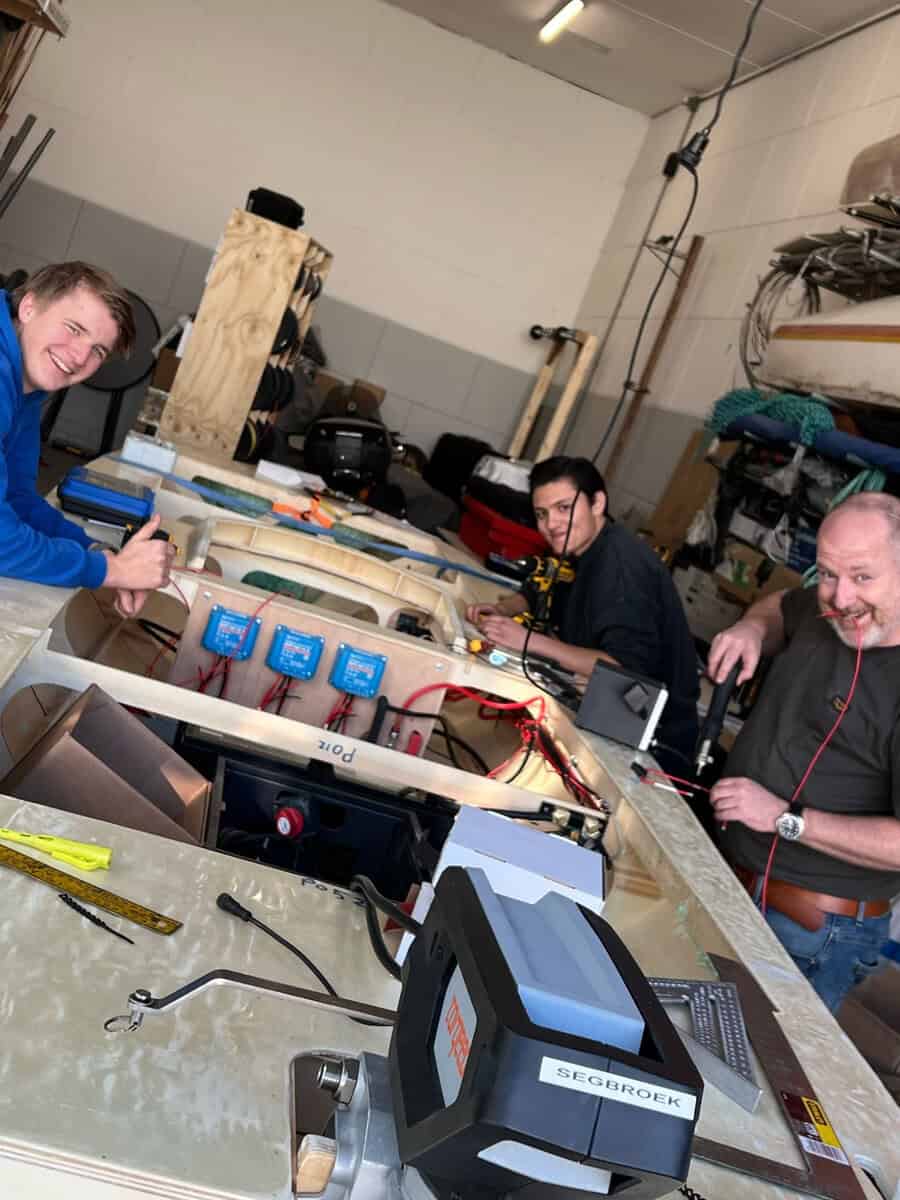
In early December, we were approached by the owners of a Family 495, asking if we could help electrify their boat with an ePropulsion Navy 6.0 set . Nils and I completed this conversion just before the new year, on Saturday, December 30, 2023. It was an intensive day with its fair share of challenges. Because we believe in the motto "if you can't divide, you can't multiply," we're sharing not only the final result but also a glimpse of the journey we've made.
Hopefully, this will help clarify not only the feasibility but also the specific expertise required for such a conversion. With the continued electrification of recreational boating and upcoming regulations from Amsterdam and Leiden , among others, more and more people will be converting their existing boats or purchasing a new electric boat. In both cases, we can meet your needs. Feel free to contact us to explore the possibilities without obligation.
Back to the Family 495:
Family 495 electrification with ePropulsion: The console before and after
The main challenges here were:
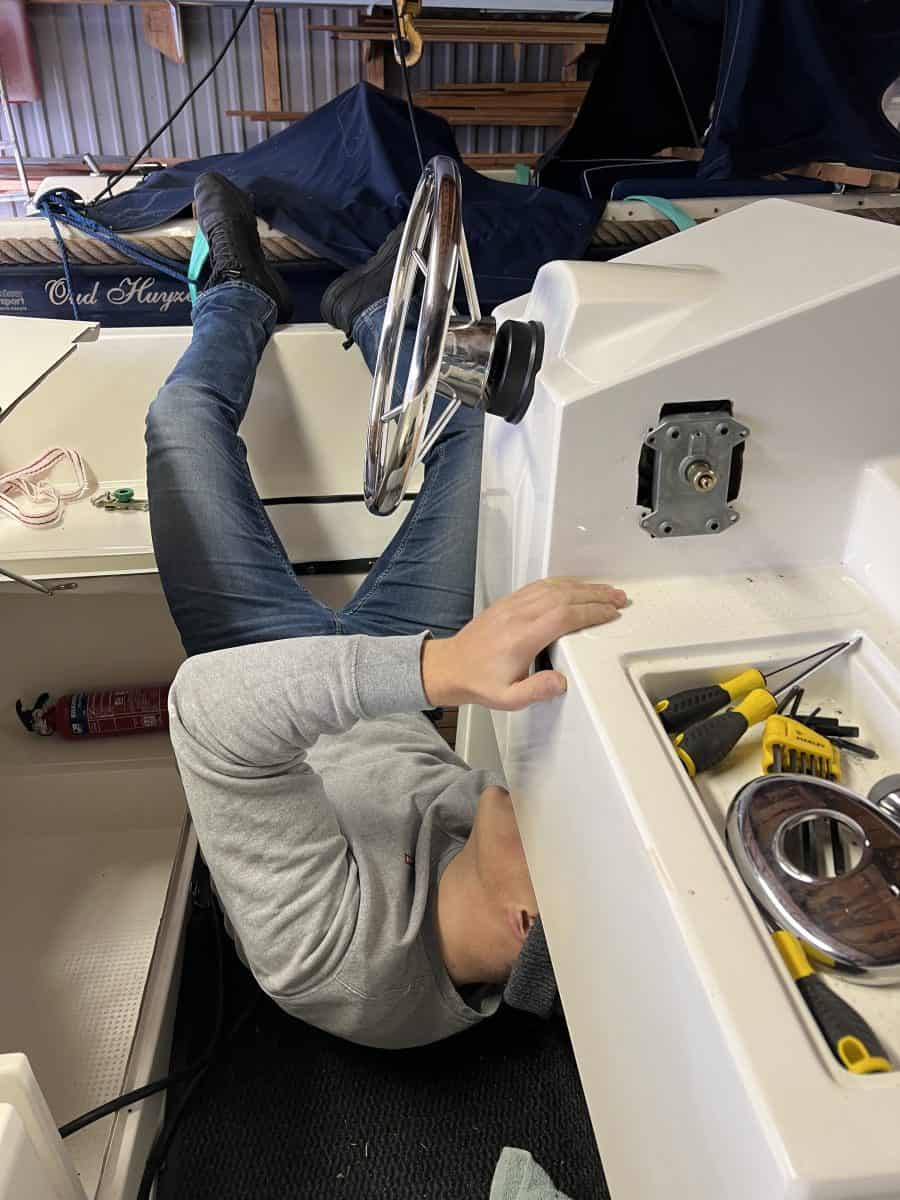
- The existing throttle was virtually impossible to remove, and the opening in the console was much larger than the new throttle could cover. A thin, fiber-reinforced base plate was fabricated in consultation with the customer.
- The three existing feedthroughs for the ignition switch, kill switch, and 12V plug had to be 'reused', which ultimately led to this display placement and a nice new Talamex Curved USB/12V combination.
- These types of sloops are produced quickly and in large series, and subsequent modifications to the equipment aren't always taken into account. Running the necessary cables was a learning experience and sometimes required some flexibility:
Family 495 electrification with ePropulsion: The 'back box' before and after
Here again there are a number of challenges.
- Our initial recommendation was to build a frame and securely mount the ePropulsion E163 battery to it. The customer preferred a simpler setup and simply used a tension strap.
- These beautiful new ePropulsion batteries use a waterproof plug-and-play connection. However, this connection wasn't included in the cable set that comes with the motor. Installing such a connection on a 35mm square cable requires specialized tools and knowledge. We do have those, but it actually makes this setup less plug-and-play for consumers.
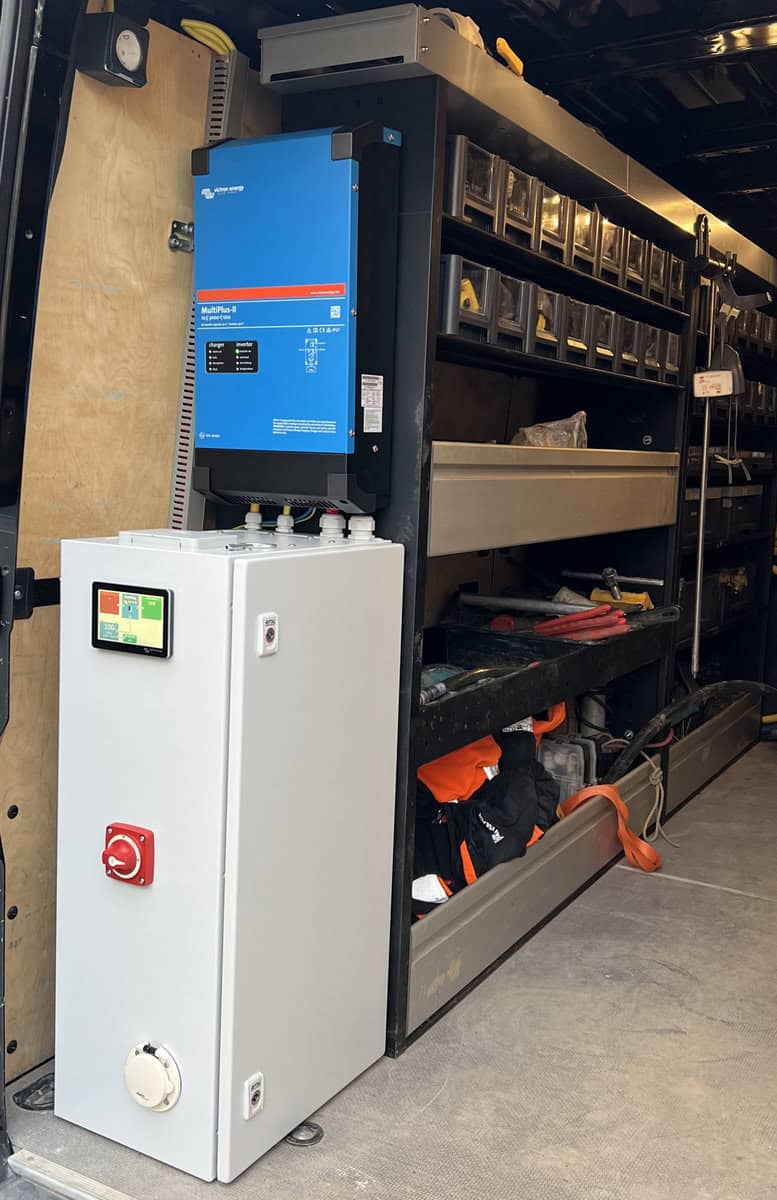
- We like to work as neatly as possible. Tucked away a huge tangle of cables while still keeping the switches (earth leakage, shore power, battery, and main switch) accessible isn't easy.
- The client didn't have high requirements for onboard power; a USB charger would have sufficed. However, the battery produces 48V, which requires an inverter to convert to 12V. This inverter isn't simply connected to the battery. Using a tip from our colleagues at ZuidWesterSloep, we managed to add a thin wire to the standard connection and power the inverter with it. If a higher wattage is required, for example, for a stereo or refrigerator, these nice new batteries don't make things any easier. They're ideal for a standard connection, but for more demanding customers, even with a USB output, things quickly become more complex.
Family 495 electrification with ePropulsion: The engine before and after
Aside from some fiddling with the steering and routing the cables, replacing the engine wasn't too complicated. However, the new engine is longer than the old one, and the boat is actually too low for adjustment. We'll do that during the launch. Installing the shore power connection (not visible in the photo) also required some flexibility from Nils and some ingenuity from me.
Family 495 electrification with ePropulsion: Q&A
Why this engine as an alternative to a 15hp petrol engine?
Comparing an electric motor directly to a gasoline engine remains tricky. An electric motor almost always loses out on power and therefore top speed, but an electric motor will always beat a gasoline engine on torque and therefore acceleration or speed. As Nils once so aptly put it: Electric boating may not be fast, but it is pleasantly quick. In principle, this boat would have been perfectly fine with a 3kW motor in regular, good weather. If the weather is unfavorable or the throttle needs to be revved, a 6kW offers slightly more possibilities. Because the customer's primary concern was range, our initial recommendation was the ePropulsion Navy 3kW in combination with the large ePropulsion E163 battery. However, the price difference between the Navy 3kW and Navy 6kW was almost negligible for this set, so the 6kW was ultimately chosen. We did discuss other brands, but the customer ultimately opted for the ePropulsion set .
Can this also be done on location?
We strongly prefer to carry out such a conversion in our own workshop in Monster or at our partner's in Woubrugge due to the facilities and tools available. We carried out this conversion in Woubrugge.
Can this also be done with my boat?
We think so. In fact, we're convinced that electric boating is a much better alternative than using a combustion engine for 95% of boaters. We're happy to help; feel free to contact us.
How much does something like that cost?
Electrification is still more expensive to purchase than a combustion engine. On the other hand, such a system is virtually maintenance-free and has minimal running costs. Over its lifecycle, electric boating is already demonstrably more cost-effective. This specific conversion cost a total of approximately €11,500.