Peter Volken Smidt – episode 4 – Electrifying a Contest 30
Introduction Robust-MT Marine Technology BV.
He who cannot share cannot multiply! At Robust-MT Marine Technology BV, we believe that success is a combination of factors. Knowledge is just one of them, but it's useless without facilities, resources, capabilities, and so on. For this reason, we will never be complacent about sharing knowledge or providing a platform to someone who deserves it, or when there's useful knowledge to share.
Previous episodes:
A hole in my hull, what now…
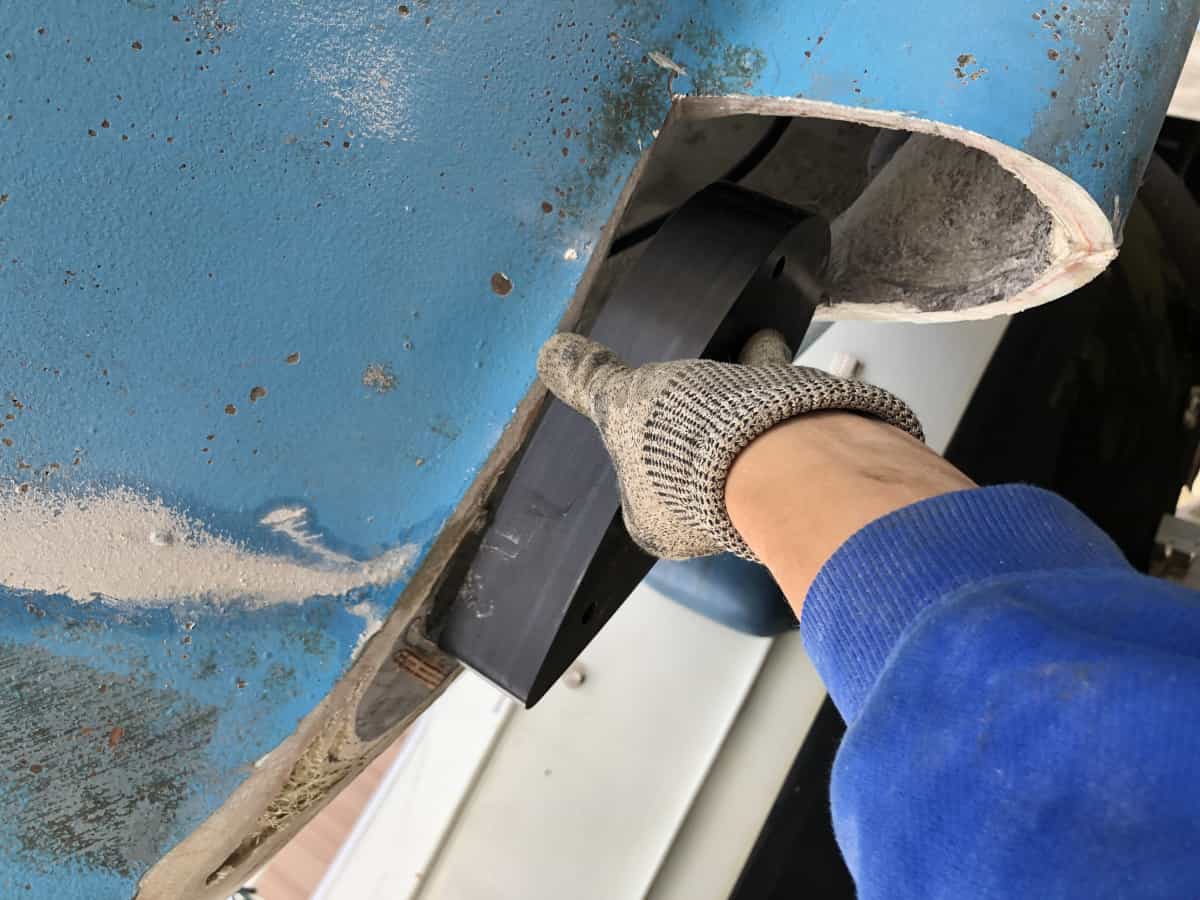
The screeching sound of the circular saw hurts my ears and my heart. It's quite a feat to cut a hole in a watertight hull. But hey, I have to demolish something first to be able to rebuild it properly. The solid end where the water-lubricated propeller shaft exits is perfectly suited for the new location of the pod motor's footplate. After an hour of grinding, the propeller shaft bounces around the parking lot with a thundering sound. I have a hole.
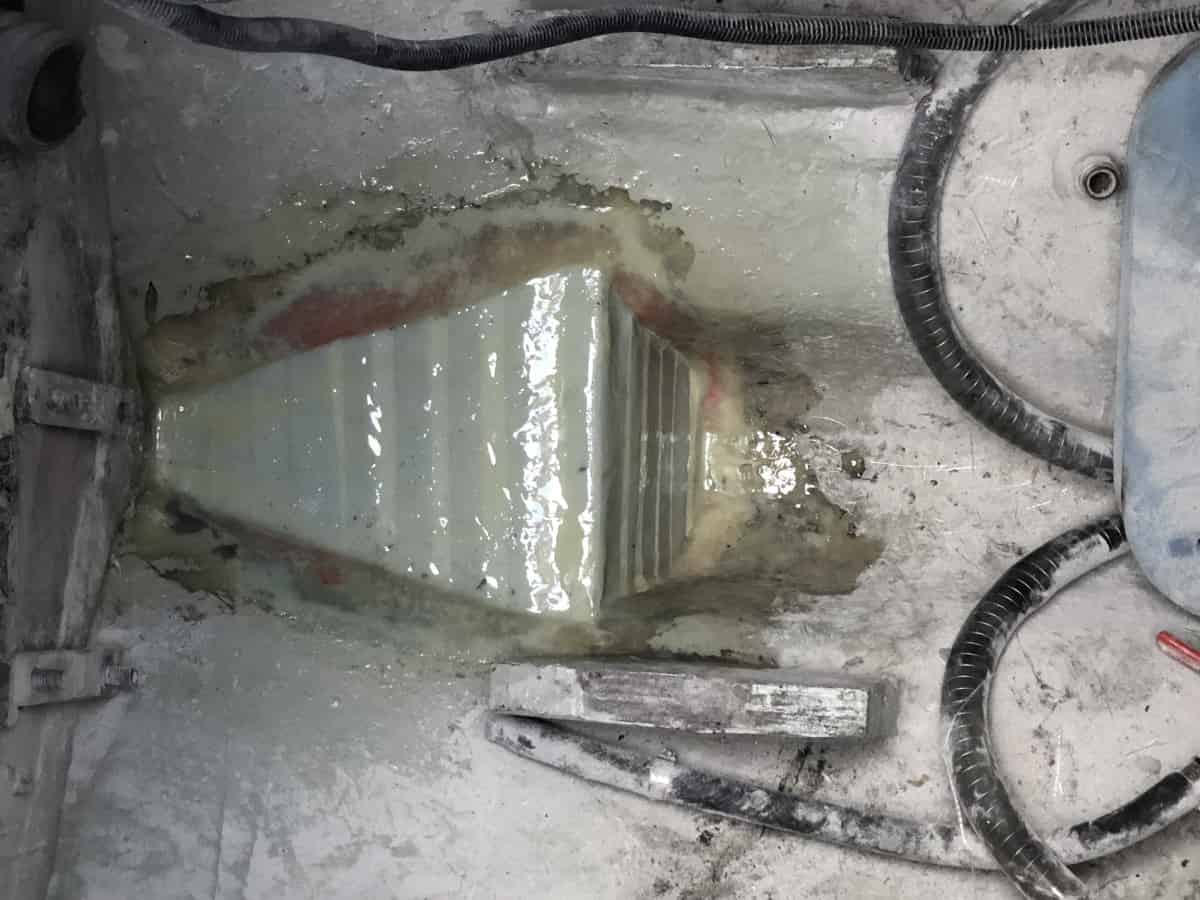
The idea is to fill this hole as horizontally as possible with fiberglass and epoxy. The current hull is at least a centimeter thick at this point. Research has shown me that you'll need to add another 1 cm of fiberglass, beveling the edges of the old polyester to create a good overlap and thus regain strength. Another tip I received was to try applying the first layer of fiberglass from the inside, as that's easier than from below. Before I start laminating, I measure a straight, horizontal line from the inside to ensure the engine is attached horizontally and tightly to the hull. Using an angle grinder with a flap disc, I sand the line horizontally and then bevel the polyester.
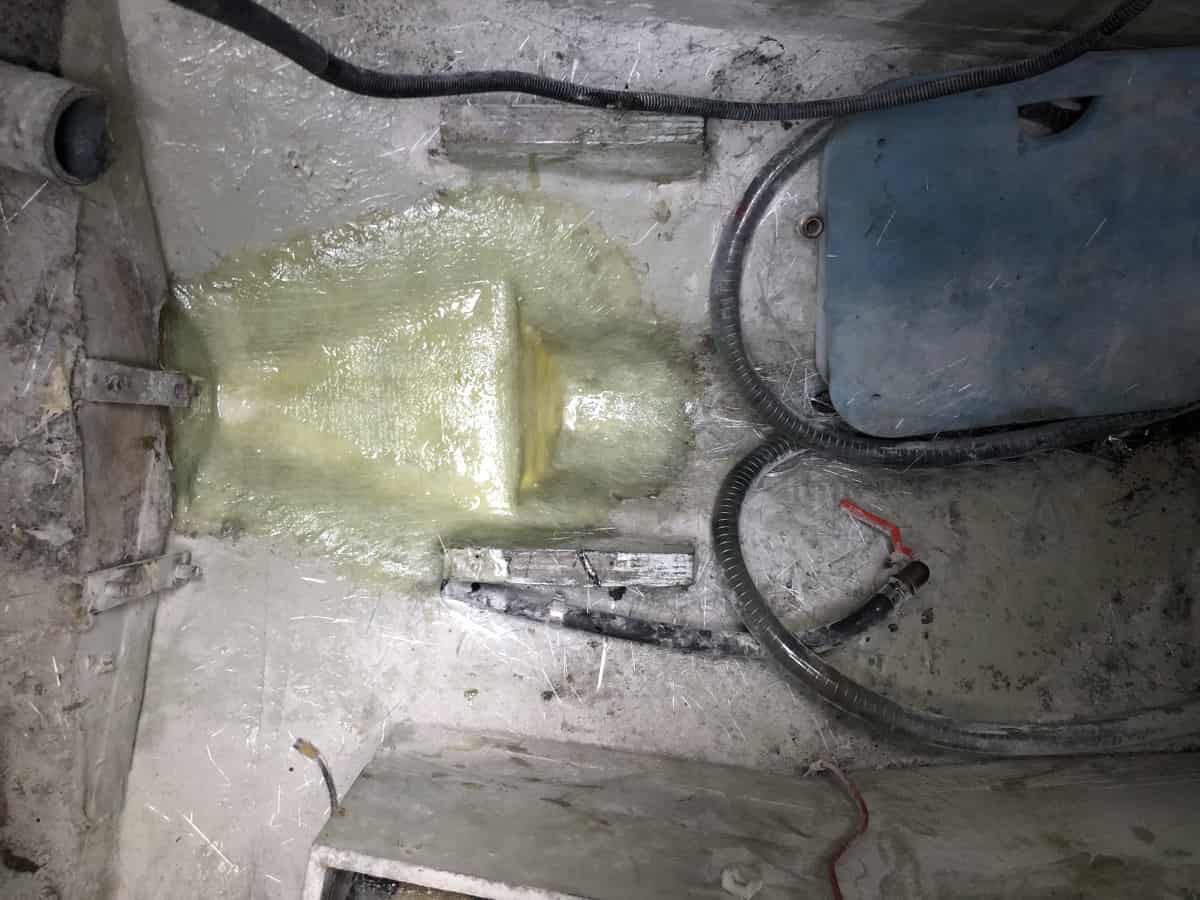
From the outside, I tape a base with duct tape. I thoroughly degrease the area and lay the first two layers of woven fiberglass on the duct tape base, starting from the inside. I deliberately chose a finely woven fiberglass mat because it's very flexible and therefore conforms well to the hull shape. I was advised to start with a thin base and then build it up to the desired thickness.
After 24 hours, the base for the new foundation has hardened. With great anticipation, I peel the duct tape layer off my new hull. The new hull emerges as smooth as the duct tape. The result is smoother than expected.