Peter Volken Smidt – episode 5 – Electrifying a Contest 30
Introduction Robust-MT Marine Technology BV
Those who cannot divide cannot multiply! We at Robust-MT Marine Technology BV believe that success is a combination of factors. Knowledge is just one of these, but it is useless without facilities, resources, capacities, etc. It is for this reason that we will never be frenetic about sharing knowledge or providing a platform to someone else who deserves it or when there are useful knowledge to be shared.
Previous episodes:
Building up in layer thickness
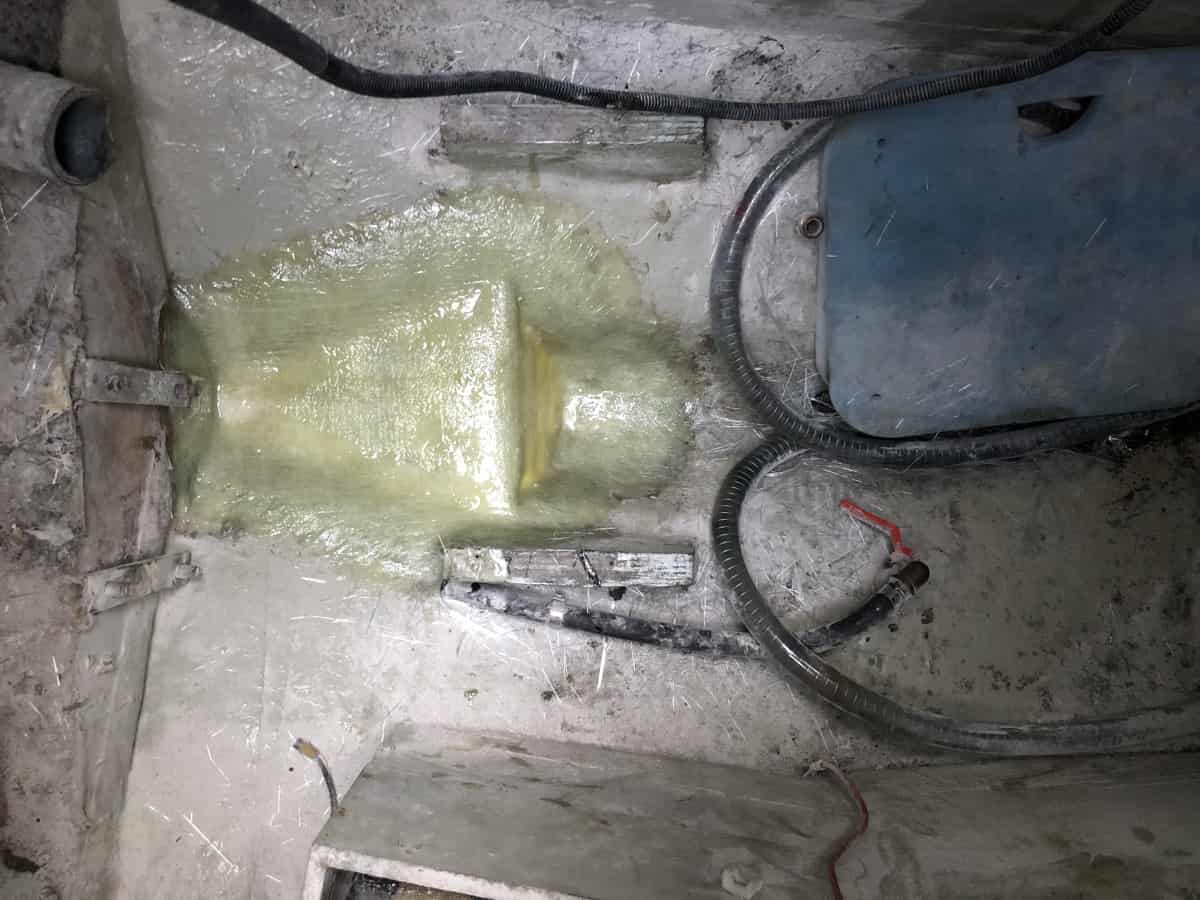
Although the duct tape has ensured a fairly even base, I noticed some surface imperfections when I measured it again. And even though the engine base will be sealed with sealant later, I still want to try to create the smoothest possible floor. Anything I can avoid in terms of sealant is a bonus. So, now that the first layer of epoxy and fiberglass has fully cured, I'm mixing an epoxy paste to level the floor completely.
Once this layer has hardened, the sander does the rest. The result is a smooth, straight base.
Underwater hull
When I bought the boat, I focused primarily on renovating the hull above the waterline. There were still stubborn old residues of a tarry antifouling paint here and there on the hull. I couldn't remove it easily, so I applied a primer and then reapplied the antifouling. After three long years in the water, I noticed small blisters between the old antifouling paint and the primer. Now that the boat is on shore, I decided to sand the entire hull below the waterline and remove all the old layers, then rebuild the hull with a two-component system. But more on that later.
Stacking layers
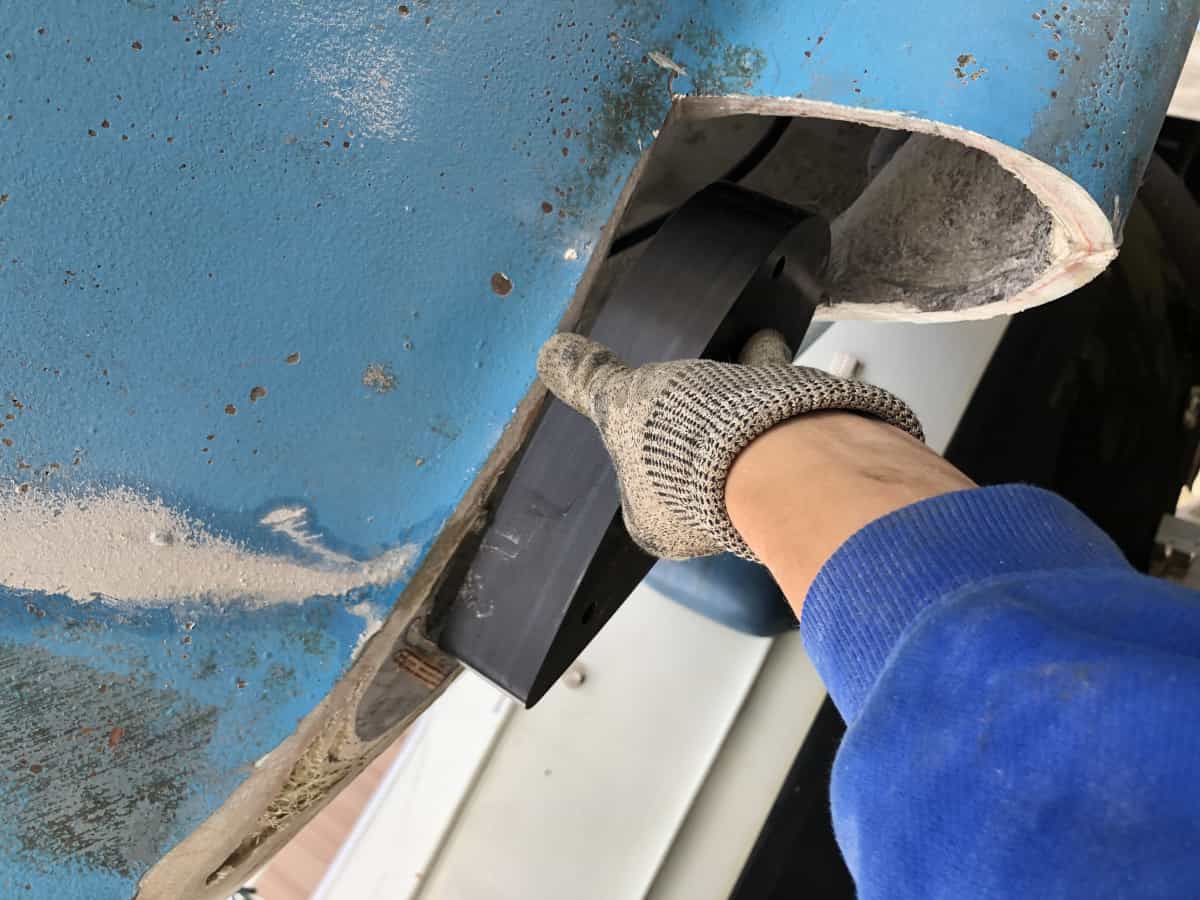
Back to the former hole in the boat. The polyester hull surrounding the hole in a Contest is impressively thick. It consists of at least 1 to 1.5 cm of polyester. To ensure this part of the hull doesn't become the weakest point, the plan is to rebuild the original thickness with fiberglass and epoxy. For the exterior finish, I'm using the same finely woven fabric I used in step 3. This fabric provides a smooth finish, but the downside is that you don't build up much thickness.
That's why I use a combination mat on the inside, combining woven fabric with cut glass fibers. This mat allows you to build up layer thickness relatively quickly.
Before I can start laminating, I cut the various mats to the correct shape, thoroughly degrease the area where I'll be laminating, and then build up the layers with epoxy. During this process, I'm careful not to create any air bubbles between the layers. And although the thickness to be built up feels a bit unstable during processing, the result 24 hours later is impressive. A very strong, thick base provides confidence in a good result.
On to the next step, properly distributing the new forces from the engine to the rest of the hull.