Wishes and goals
Full home backup
In the event of a power outage on the public grid, the entire home must switch seamlessly to the battery bank within 20 milliseconds.
Guaranteed emergency power reserve
A fixed lower limit (Minimum SoC) of 25 percent (5 kWh) guarantees sufficient reserve energy for vital consumers at all times.
Smart energy trading
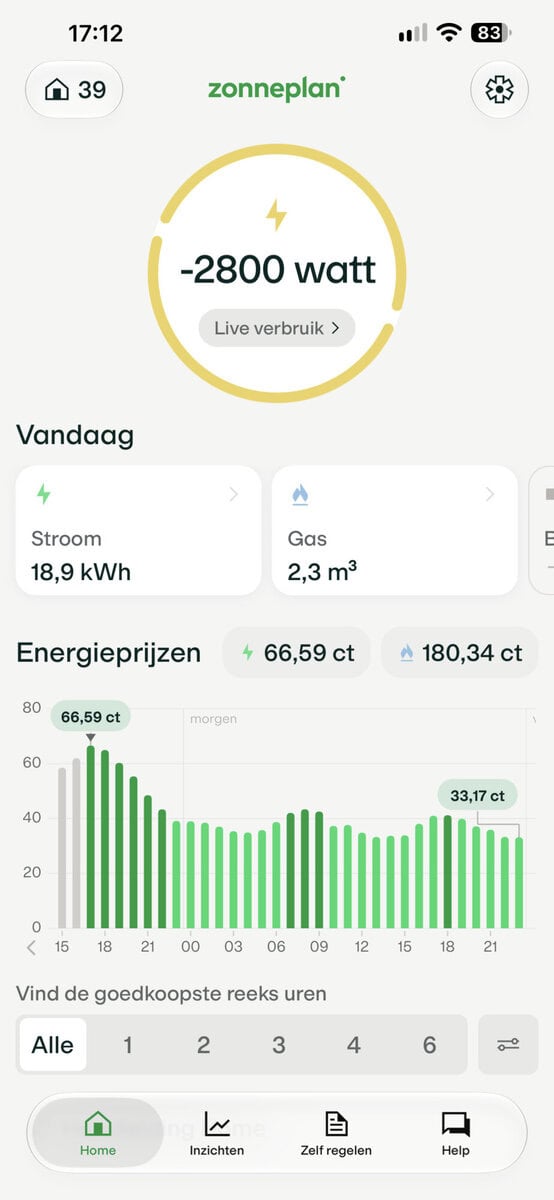
The software must automatically read quarter-hourly prices to purchase electricity during cheap periods and feed it back into the grid during price peaks.
NEN 1010 safety
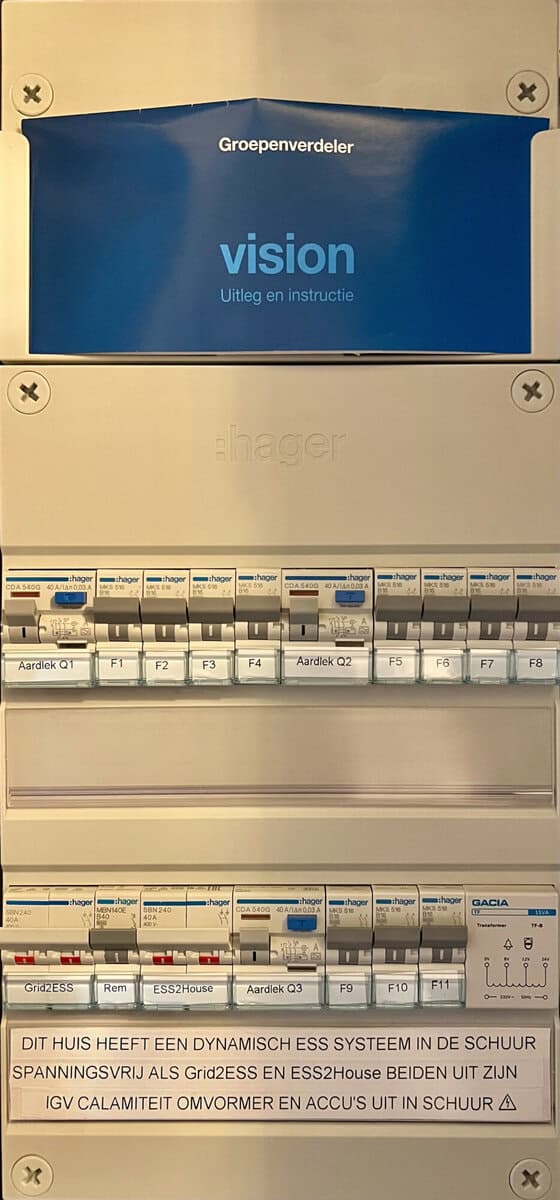
Full integration into the existing residential installation via a certified changeover switch and a reinforced meter cabinet.
Solution by Robust-MT
Inverter and charger
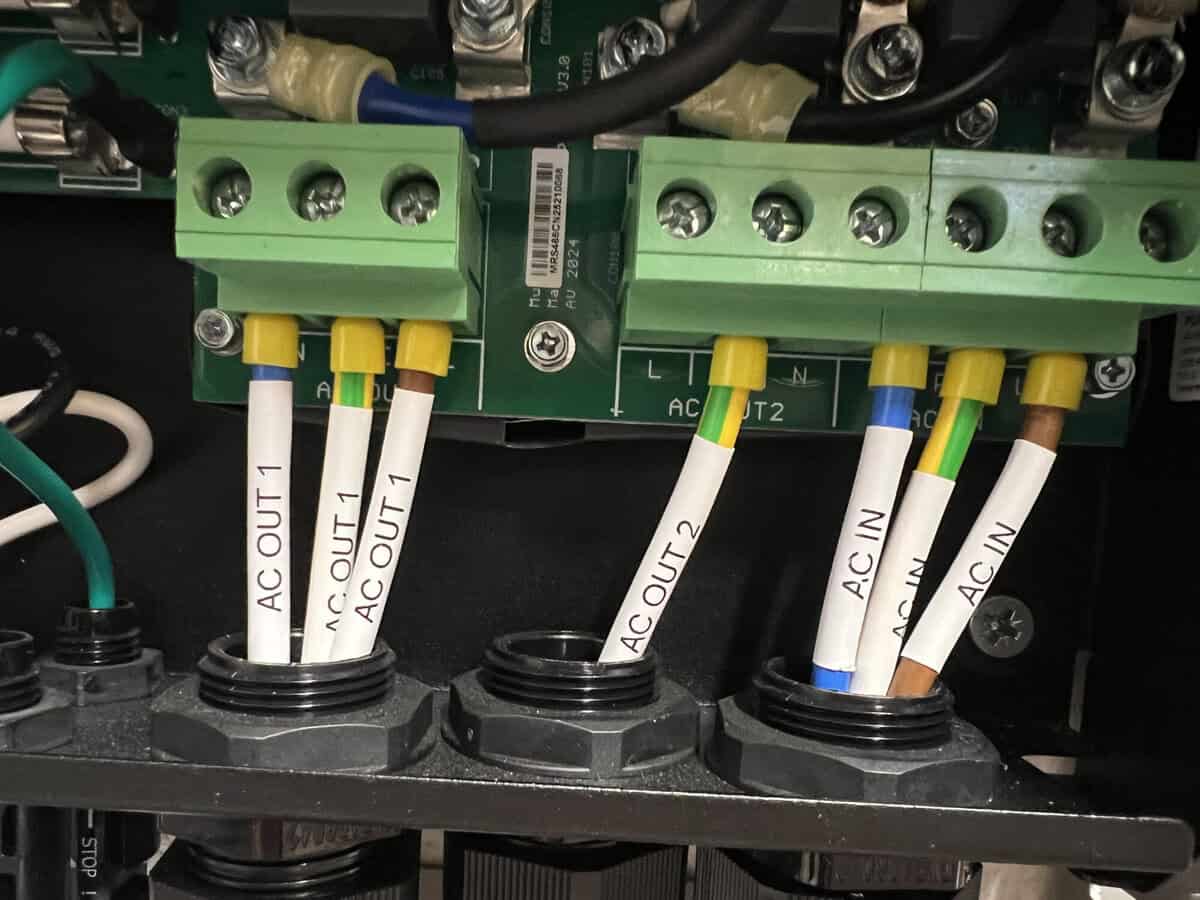
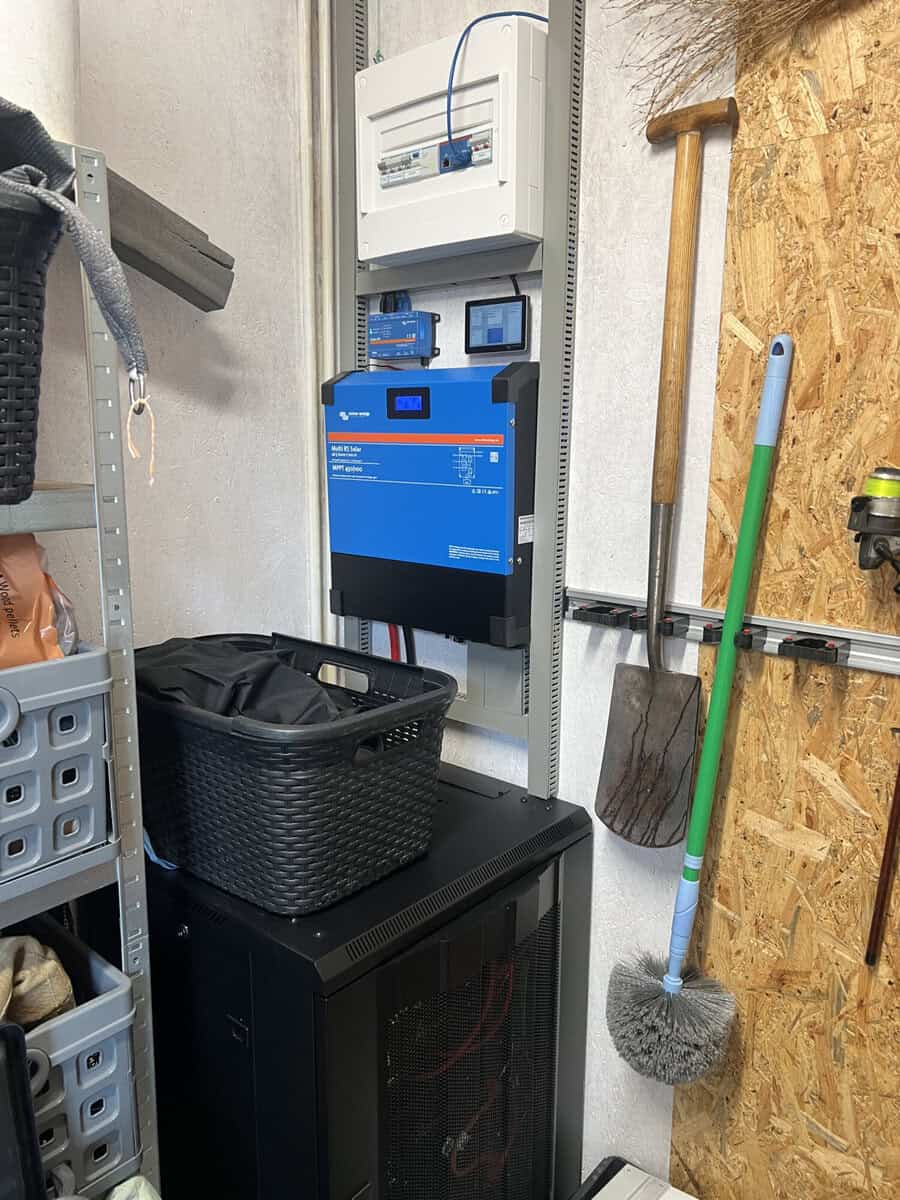
We installed a Victron Multi RS Solar 48/6000 (1-phase, 6 kW). The entire residential installation is connected behind the critical AC Out 1 output via a manual changeover switch and a B40A circuit breaker.
Energy storage
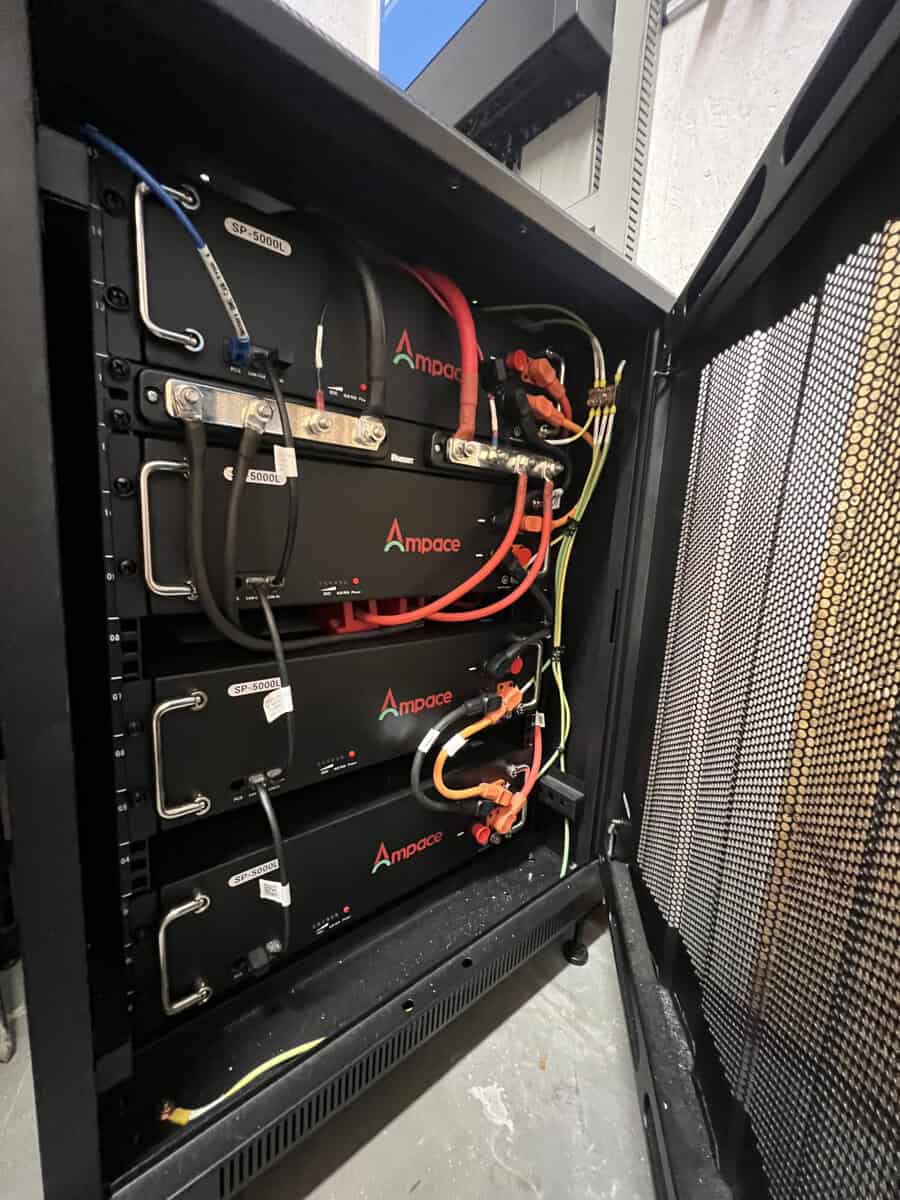
The battery bank consists of four Ampace SP-5000L LiFePO4 modules of 5 kWh each (total 20 kWh / 400Ah). The batteries are connected in parallel in pairs via 35 mm² cables and 100A Mega-fuses to a central 250A distribution strip. From this strip, a 70 mm² main cable runs to the inverter.
Communication and management
A Victron Cerbo GX MK2 forms the central brain of the system. Connection to the VM-3P75CT energy meter is established via VE.Can (250 kbit/s). The battery management system communicates via a separate CAN bus BMS connection (500 kbit/s) with active DVCC control.
Infrastructure and meter cupboard
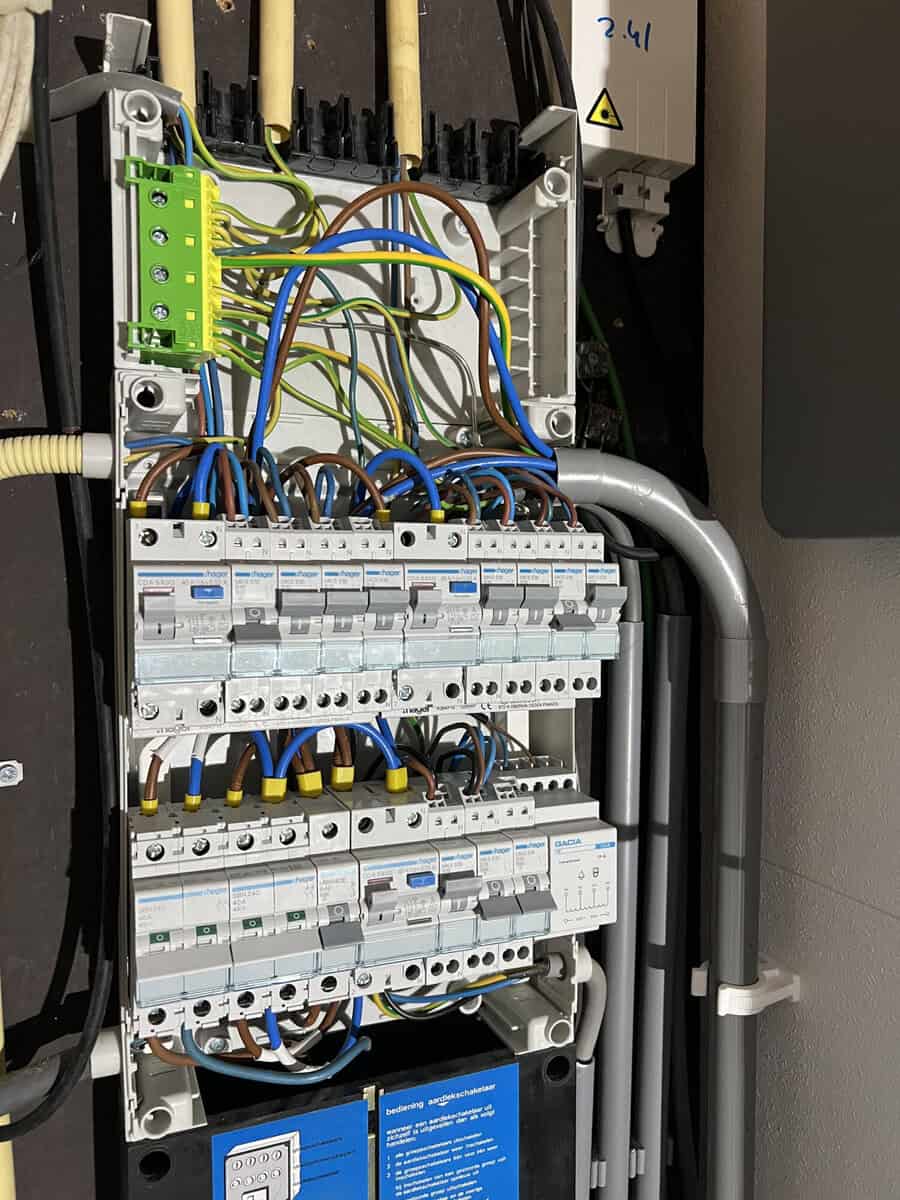
We routed the entire wiring from the attic and the shed through the stair cupboard and the crawl space to the meter cupboard in 25mm PVC conduit and 40×40 wiring ducts. In the main meter cupboard, we installed an additional main switch and a break switch.
Key practical lessons
Mechanical assembly and cabling
Assembling the 19-inch server cabinet without a clear manual required precise measuring; the beams had to be mounted in exact positions to fit all four battery modules.
Strict star grounding
The grounding of all enclosures and the server cabinet required a modification from a daisy-chain configuration to a strict star connection using 6 mm² flexible copper wire to a single central ground block. Additionally, both the AC-In and both AC-Out connections are grounded.
Phased pre-loading and training
Because the Multi RS draws 50A from the mains by default and new batteries start up at a 2.6V standby voltage, switching on immediately would overload the fuses. We used the residual voltage to reduce the shore power limit to 9A via VictronConnect. Using a temporary Schuko plug, we first charged all four batteries individually to 100 percent. Subsequently, we connected the batteries in stages (first 2, then 3, and finally 4 modules) so that the BMS could address each module without errors.

Upgrade to Type B RCD in new cabinet
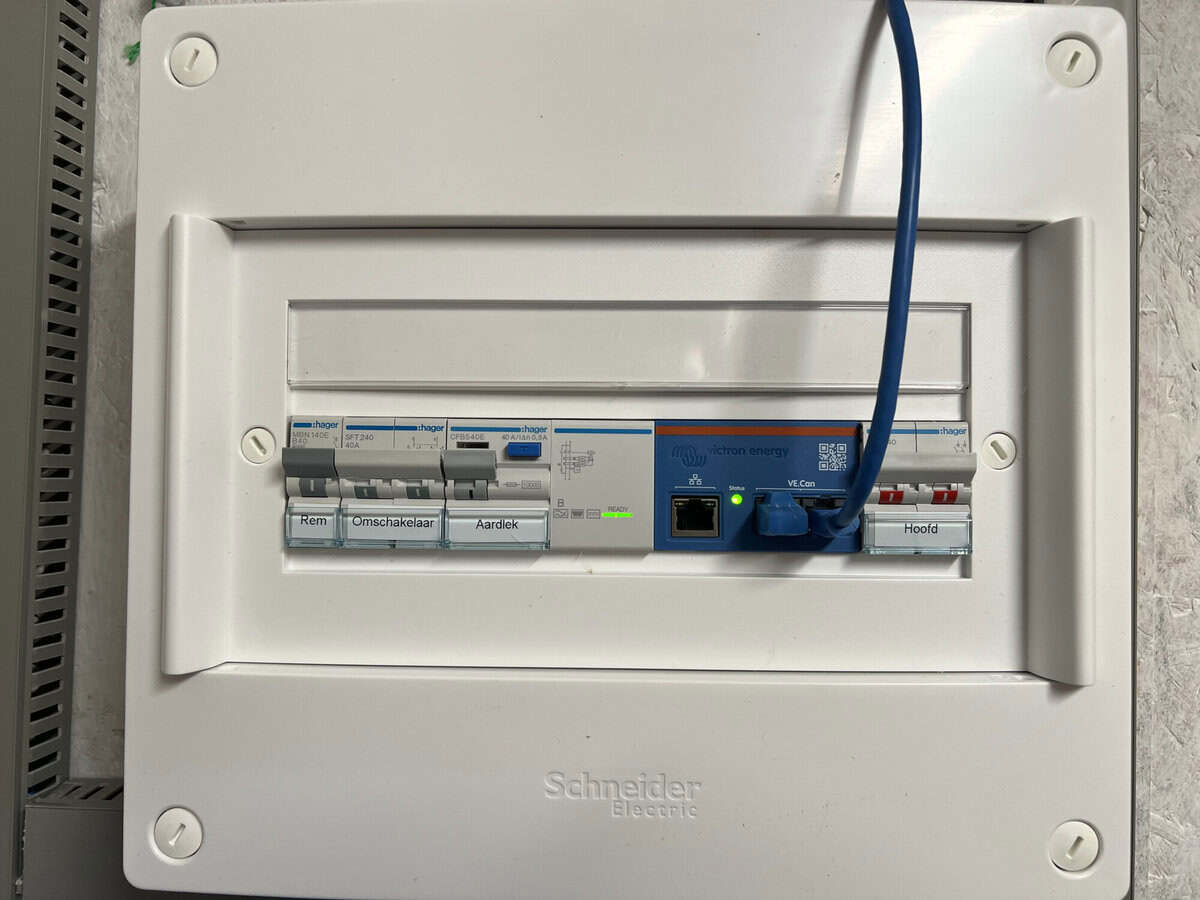
The 16A Type A residual current circuit breaker supplied with the changeover box tripped immediately in the changeover box as soon as the system switched between charging and feeding back. High-frequency inverters require Type B protection. Because the replacement 4-pole Hager CFB540E Type B residual current circuit breaker (40A, 300mA) is four modules wide, we constructed an entirely new Schneider 13-position meter cabinet. We integrated the earthing strip from the old cabinet into this and fitted the entire unit with NEN 1010-compliant labels.
Optimization of VRM parameters
To prevent unnecessary wear and tear due to minimal price differences, we increased the battery depreciation costs in VRM from €0.01 to €0.05 per kWh and set the exact tax formulas for the Zonneplan quarter-hourly prices.