
Buy an electric boat
A new boat, built from the first drawing to sail electrically. Our specialists assemble your electric boat in aluminium or HDPE, with a drive system, battery, and charging solution tailored to how and where you sail. From the first test run to delivery in Monster or on location.
Built in the Netherlands
Aluminium & HDPE new construction
Hull designed for electric boating
Own range of drive systems
From shore power to propeller
Why new construction?
Give your boat an electric future
What is an electric boat? An electric boat is a boat powered by an electric motor. This motor draws its energy from a battery pack instead of gasoline or diesel. As a result, an electrically powered boat sails silently, without exhaust fumes or pollution of surface water. An electric boat requires little propulsion maintenance.
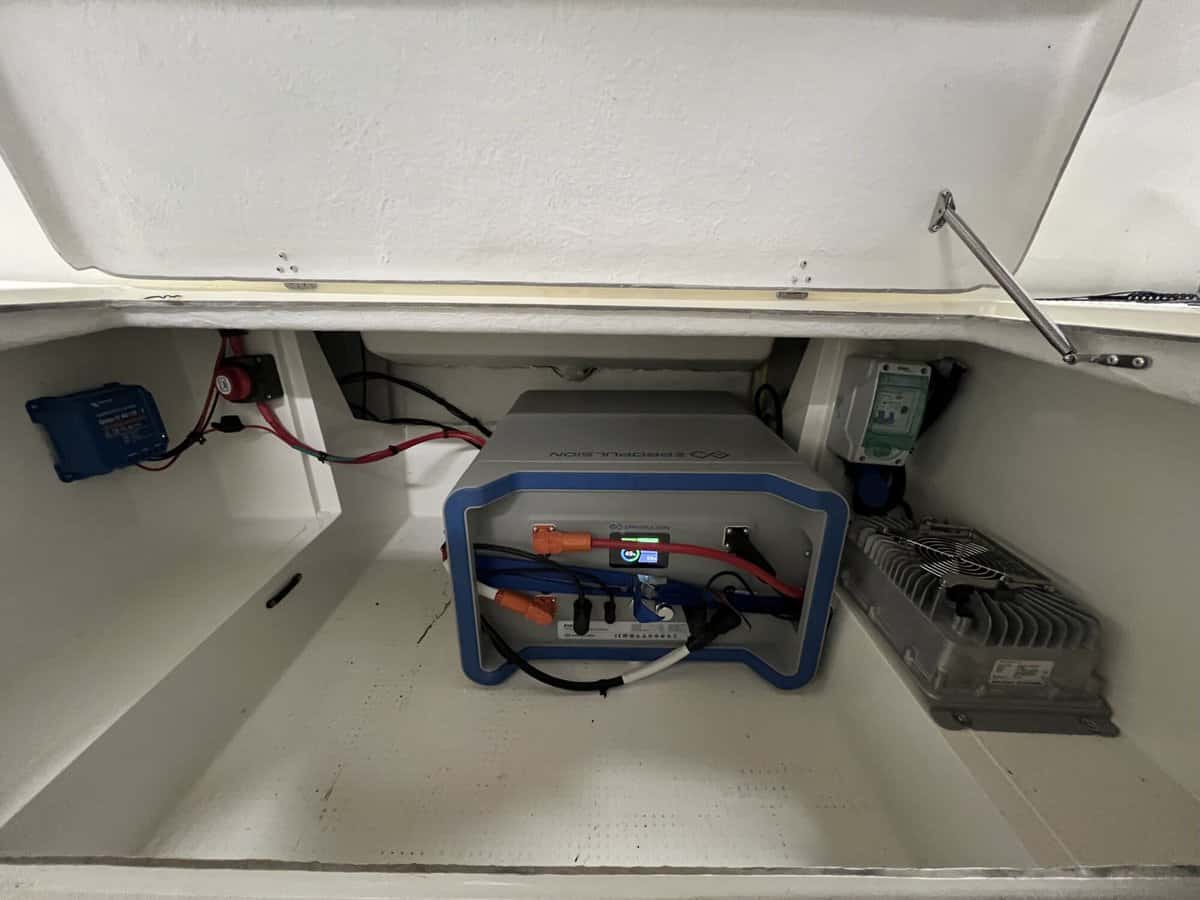
With a new electric boat, the propulsion system does not have to fit into a hull originally designed for a combustion engine. Hull, weight, battery placement, and wiring are matched from the start. You will notice this on the water, because a more efficient hull requires less power, so you sail longer on the same battery. No compromises, but boats that are technically sound and built for years of reliable use
- Hull optimized for efficient electric boating
- Motor, battery, and charger designed as a single system
- Low-maintenance materials: no paint or antifouling needed
- The complete electrical picture, from navigation to lighting
The benefits on the water
Why boat electric?
Electric boating means sailing with an electric motor and battery, without a combustion engine on board. You sail in silence, without pollution, emissions, or leakage, above or below the water. With a boat built for this from the start, you get the most out of those benefits.
Sailing more quietly
No sound of a combustion engine. This provides more peace and quiet on board and in the boating area. While sailing, you naturally start whispering and become much more aware of the nature around you. Once you have experienced it, you will never want to go back.
No exhaust fumes while sailing
Outboard motors discharge underwater; this is 100% eliminated with the electric drive. The electric drive emits no exhaust fumes while boating. Pleasant for everyone on board and in the surrounding area.
Less engine maintenance
An electric motor has fewer moving parts. Fixed or regular maintenance items of a combustion engine (such as engine oil and filters) are eliminated.
Usage costs per sailing hour
A combustion engine primarily produces heat and dissipates this heat through the cooling system and exhaust gas. This waste does not occur with an electric motor, which is therefore much more efficient. With current electricity costs (2025 measurement), a sloop can travel up to 50 km for €1. Read our blog for more information.
Immediate response
An electric motor responds instantly to the operation of the throttle. This helps with controlled maneuvering.
Welcome to emission-free zones
More and more boating areas are banning fuel engines. For example, the center of Amsterdam has been an emission-free zone for recreational boating since April 1, 2025. You can simply sail into it with an electric boat.
New construction in two materials
Choose your electric boat: aluminium or HDPE
Are you looking for an electrically powered sloop, tender, or motorboat? We build electric boats in two materials. Both are robust, low-maintenance, and made from recycled material. The difference lies in appearance, models, and usage.

Aluminum boats
Sloops and tenders made of high-quality aluminium, built in the Netherlands. Self-draining, so they can be used year-round without a cover, and light enough for a trailer. Nine models, from the ZWS-420 to the ZWS-730.
HDPE boats
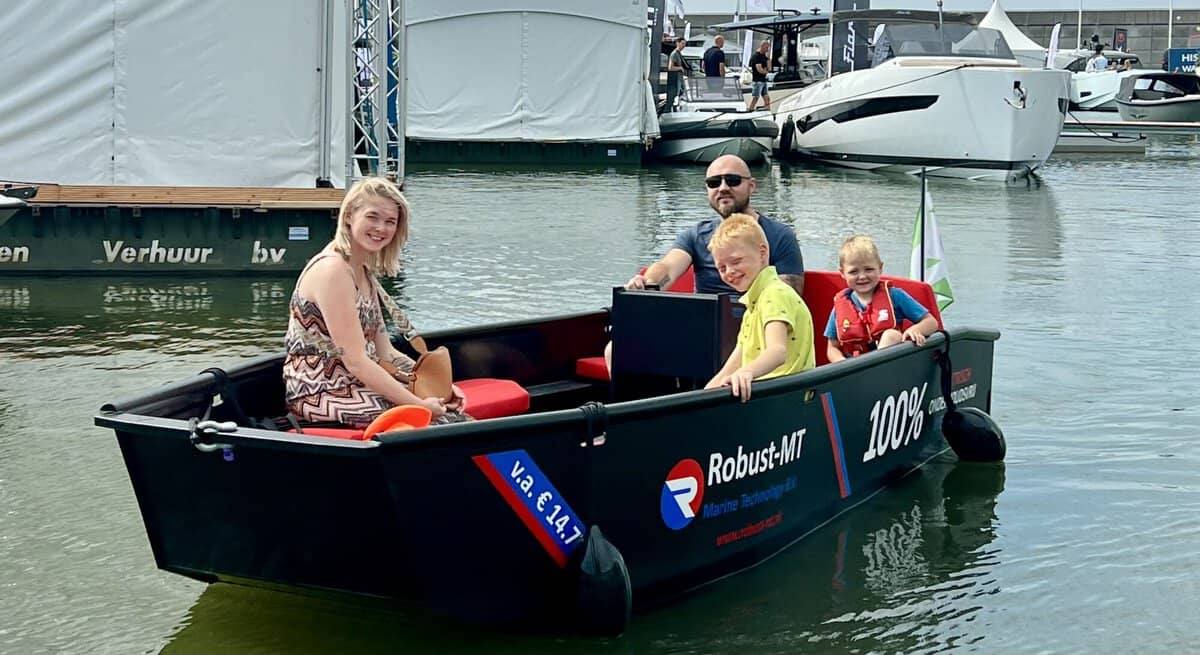
Made from recycled HDPE sheet material: practically indestructible and infinitely recyclable. Frame from Naaldwijk, cushions from 's-Gravenzande, and finishing in Monster, all within 4 km.
Business use / rental
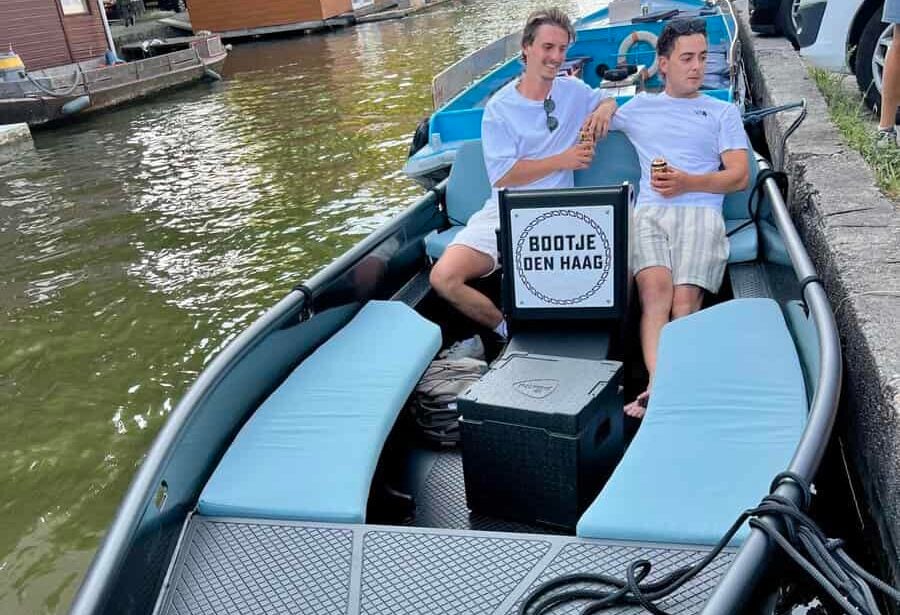
An electric sloop or tour boat for intensive (group) rental, rechargeable via a standard power outlet. Also suitable for rental fleets, campsites, and marinas.
Aluminium or HDPE: the differences at a glance
Feature | Aluminum boat | HDPE boat |
|---|---|---|
Material | High-quality aluminium, built in the Netherlands | Locally recycled HDPE sheet material, infinitely recyclable |
Maintenance | Very low maintenance, no paint or antifouling | Virtually maintenance-free, no paint or antifouling |
Appearance | Raw aluminium or a colored wrap | Black or white, to be dressed up with colored stickers and cushions |
Strong point | Self-draining, in the water year-round, light enough for the trailer | Practically indestructible, self-draining, shallow draft, also for water without water sports facilities |
Models | Nine models: ZWS-420 to ZWS-730 | Robbie 425, custom design and even a tour boat |
Ideal for | Boating with family and friends, also on larger waters | Drop-ins, rentals, holiday parks and intensive use |
From sea trial to delivery
This is how we build your electric boat
Every boat is custom-built. We tailor the engine, battery capacity, and charging infrastructure to how and where you sail.
1. Introduction & test sail
We discuss your boating preferences: where you sail, with how many people, at what speed, and for how long. Afterwards, you take a test sail in Monster or Stellendam.
2. Compilation & proposal
You choose the model and material. We select the appropriate drive, battery capacity, charging solution, and options such as lighting, stereo, or refrigerator, and create a customized proposal.
3. Construction & finishing
The hull is built in the Netherlands. In our own workshop in Monster, we install the propulsion system and the complete electrical installation on board.
4. Delivery & explanation
After inspections and a sea trial, you will receive an explanation of the system, charging, and operation. You can also visit our workshop after delivery.
Insight into the investment
How much does an electric boat cost?
The price of a new electric boat depends primarily on the length, material, chosen propulsion system, and battery capacity. The battery determines how long you can sail and is a significant cost factor. The table below provides an initial indication of our range.
Type of boat | Indication of new price | Included as standard | Suitable for |
|---|---|---|---|
Electric boat HDPE · Robbie 425 | From € 18,775* | Lightweight electric motor, portable battery, charger, steering system, cushion set | Recreational boating, small waters |
Compact aluminium sloop ZWS-420 to ZWS-550 | From € 25,975* | Luxury version, cushion set, electric motor, battery, charger, steering system, locks, lines | Boat trip with 4 – 6 people |
Spacious aluminium sloop or tender ZWS-580 to ZWS-730 | From € 29,995* | Luxury version, cushion set, electric motor, battery, charger, steering system, locks, lines | Larger groups and longer sailing days |
Business / tour HDPE · rental | On request | Powered and charged via a standard socket, delivered fully custom-made | Rental and intensive use |
Indicative pricing for 2026, subject to change and no rights may be derived from this. Furthermore, every boat is unique and we provide custom quotations.
Would you like to know what your electric boat costs?
Tell us which model appeals to you and how you want to sail. Then we will create a tailored proposal.
The advantages and disadvantages on the water
Pros and cons of buying an electric boat
An electric boat is not for everyone. That is why we honestly compare the advantages and disadvantages, and explain how we address those disadvantages when configuring your boat.
The benefits
-
Peace on board.
No engine noise and no vibrations. You can hold a normal conversation, even at cruising speed, and hear the water against the hull again. -
Clean boating.
No exhaust fumes, no fuel smell, and no oil or gasoline ending up in the water. Pleasant for you, your guests, and the nature around you. -
Low costs per boating day.
Electricity is much cheaper per kilometer than gasoline or diesel. With current electricity prices (2025 measurement), a sloop can travel up to 50 km for €1. -
Minimal maintenance.
No oil changes, no filters or spark plugs, and no winterizing the engine. With an aluminium or HDPE hull, painting and antifouling are also eliminated. -
Ready for the future.
More and more boating areas are banning fuel engines, such as the center of Amsterdam since April 1, 2025. With an electric boat, you can sail there worry-free.
The disadvantages, and our approach
-
A higher purchase price.
The battery is the largest expense of an electric boat. Our approach: we tailor the battery capacity to how you actually sail. This way, you don't pay for kilowatt-hours you never use. -
A more limited range.
Anyone who wants to boat all day plans ahead. Refueling along the way is not an option. Our approach: low-resistance hulls and a battery with ample reserve. For most day trips on inland waters, that is more than sufficient. -
Charging takes time.
Charging takes hours, whereas refueling takes a few minutes. Our approach: you charge overnight at the berth via shore power. No power at your berth? Then we look at solar panels or a portable battery that you charge at home. -
Cruising fast consumes a lot of energy.
Consumption increases sharply as soon as you go faster. Our approach: an electric boat is designed for relaxed cruising. Do you want to go faster occasionally? Then we will honestly calculate for you what is truly possible and what that means for the battery and budget.
The most important question about electric boating
How far does an electric boat go?
The cruising range depends on the usable battery capacity and the power the motor draws at your cruising speed. Hull shape, weight, wind, and current, in particular, make a difference. The calculation example on the right shows how speed, kWh, and cruising time are related.
- What distance or sailing time do you usually wish to cover?
- How fast do you usually sail?
- Where and when can you charge the boat?
For your boat, we calculate the required system based on your own sailing profile and an appropriate energy reserve.
Practical calculation example
A boat of approximately 6 meters
Cruising speed
7.5 km/h
Average power
1.2 kW
Battery, nominal
10 kWh
Usable, assumption 80%
8 kWh
8 kWh ÷ 1.2 kW = approximately 6 hours 40 minutes
Indicative sailing distance:
approximately 50 km
6 hours 40 min × 7.5 km/h
Calculation example, not a measured result or range guarantee from Robust-MT. Extra reserve, higher speed, headwind, current, and onboard consumption reduce the practical distance. 10 kWh and 80% usability are chosen calculation assumptions.
Real projects by Robust-MT
Our electric boats in practice
From a recreational electric boat to a rental tour boat: this is how our customers experience.
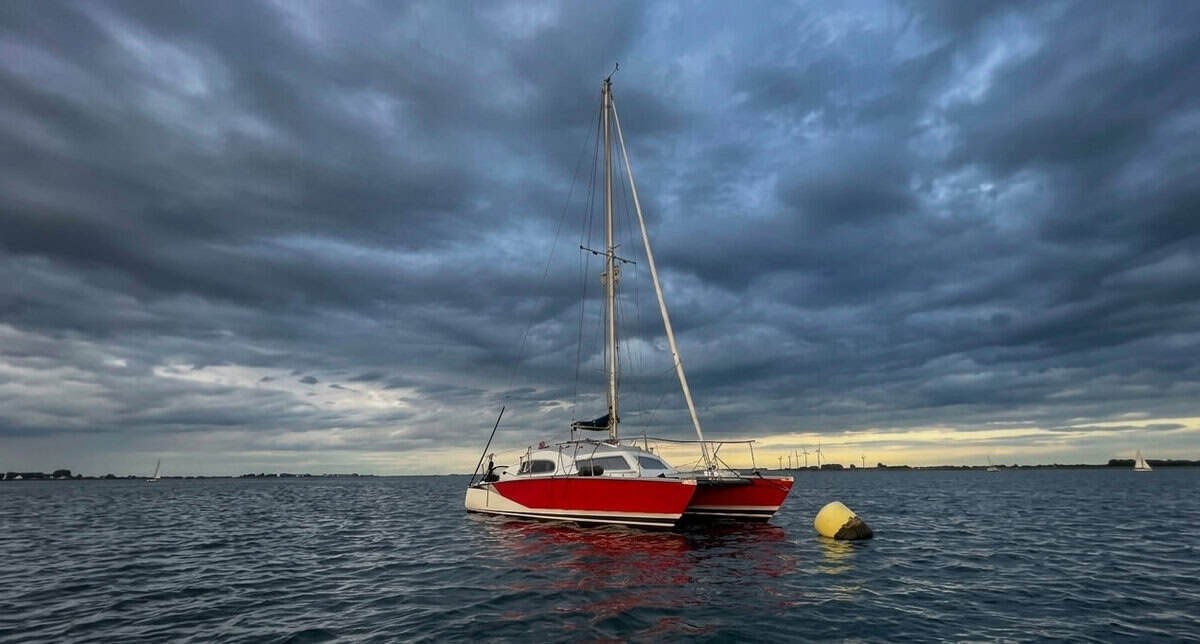
World premiere of electric Catamaran 'Lady Karemaniya'
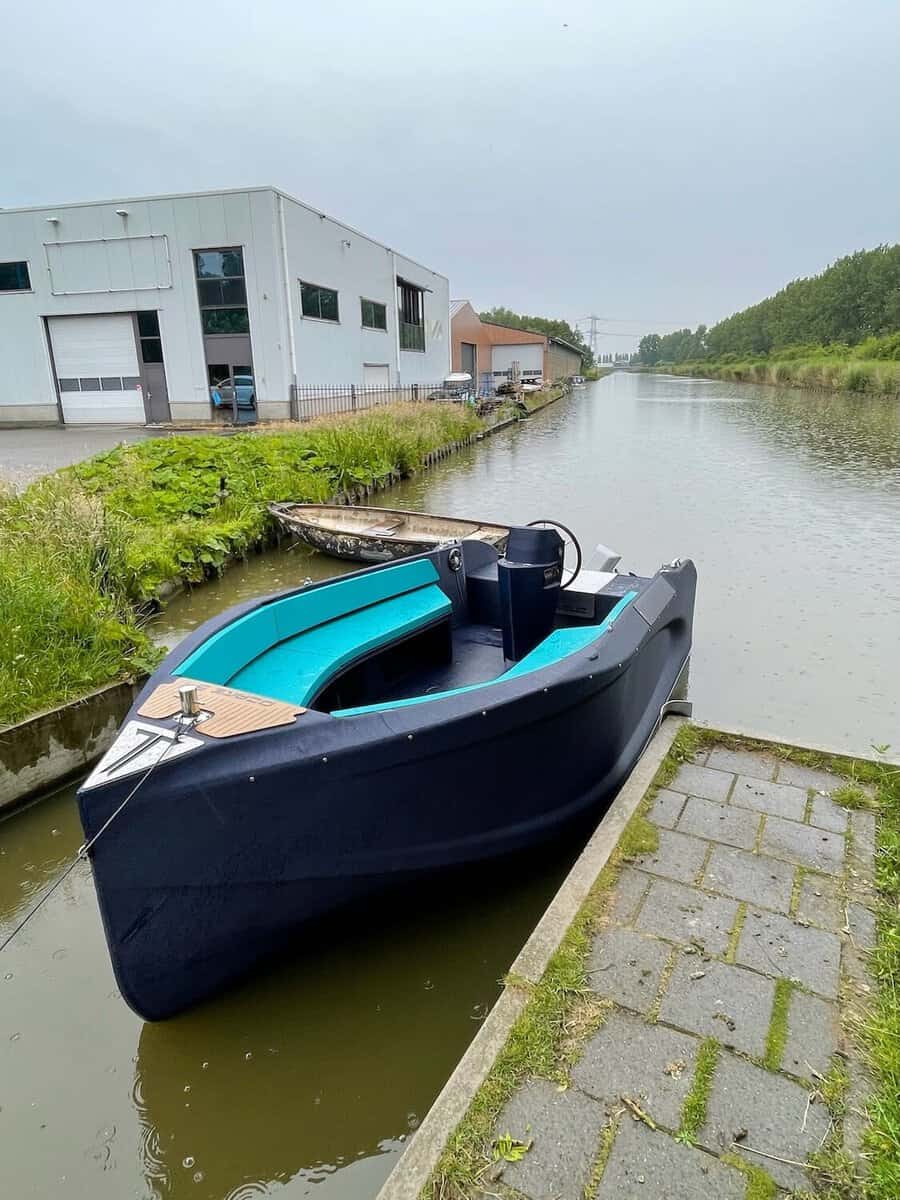
110V infrastructure for a Japanese 3D-printed Ozare 5.0 sloop
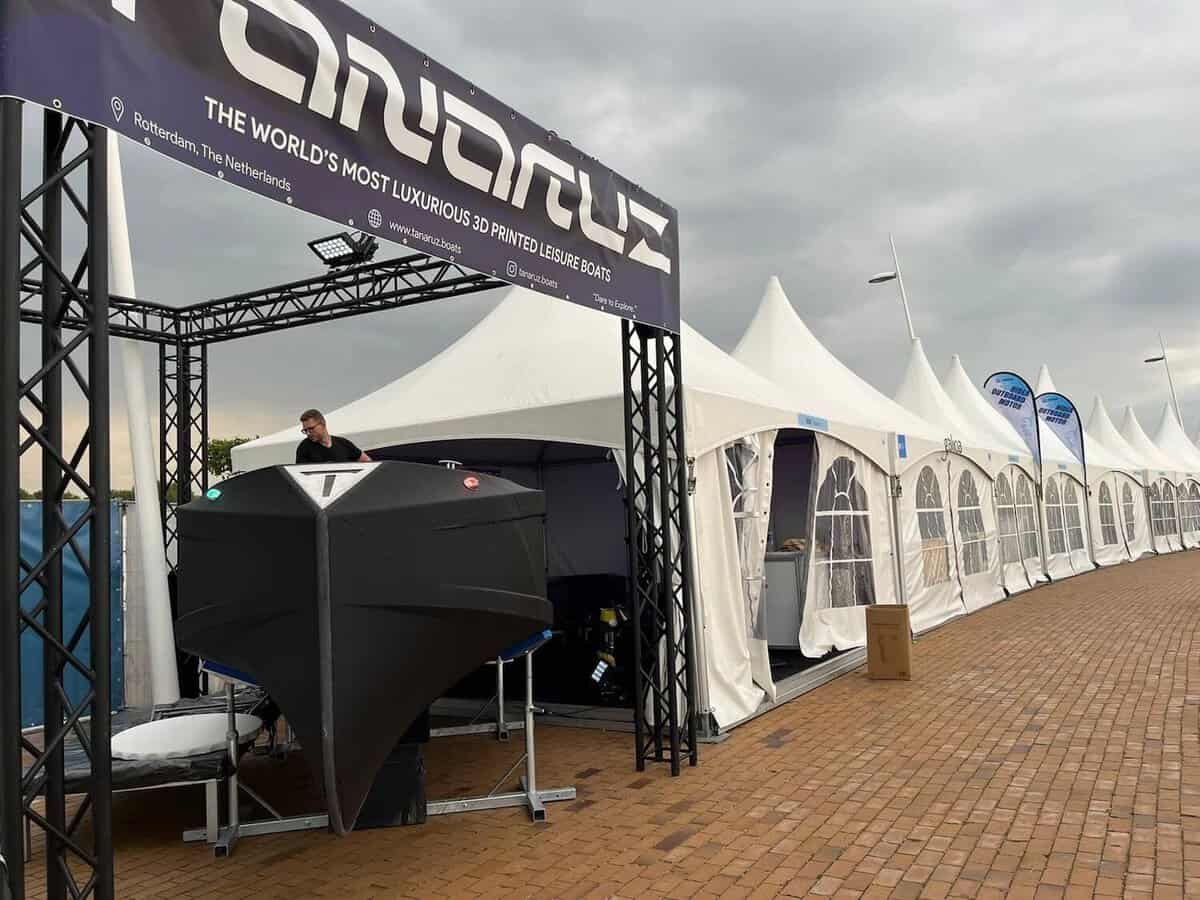
Mighty 3D-printed sloop HISWA 2023
World premiere of electric Catamaran 'Lady Karemaniya'
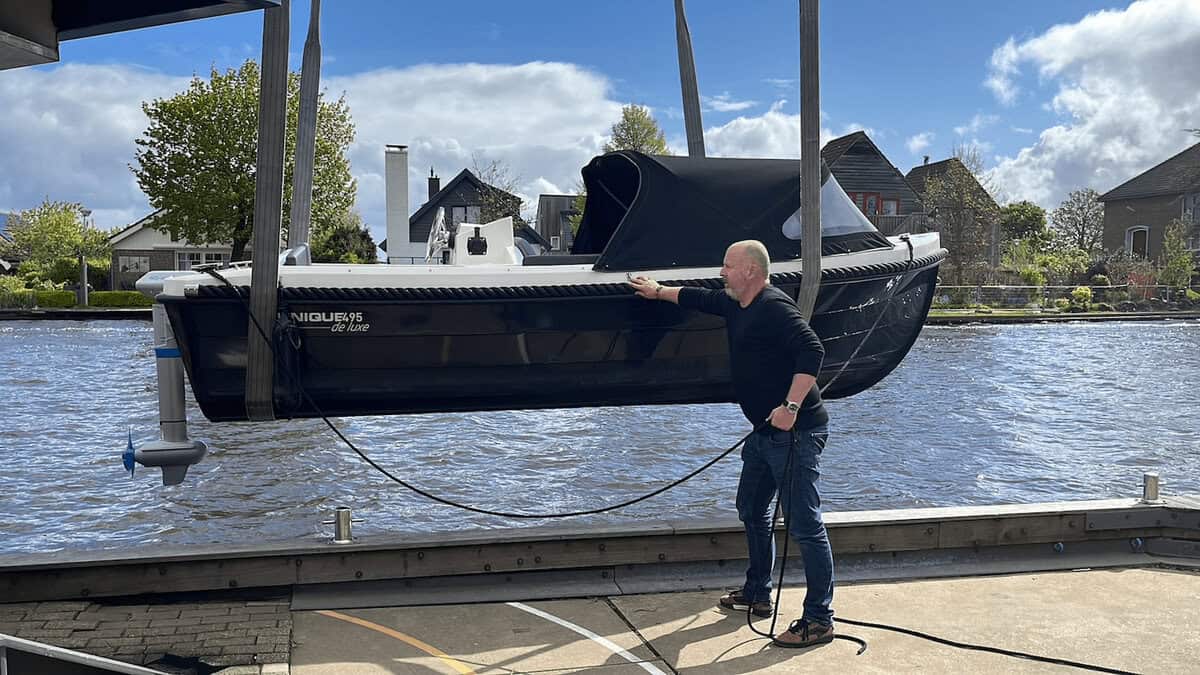
Electrification of a Unique Family 495 De Luxe sloop
FAQ
Frequently asked questions about buying an electric boat
How much does an electric boat cost?
A new electric boat from Robust-MT starts at €18,775 for the HDPE Robbie 425 (price 2026, subject to change), the most sustainable and affordable sloop on the Dutch market. Larger aluminium sloops and tenders cost more, depending on length, propulsion, battery capacity, and options. After discussing your boating preferences, we will create a tailored proposal.
What are the disadvantages of an electric boat?
The main disadvantages are a potentially higher purchase price due to the battery and a charging time of several hours. With a well-matched battery and charging at the mooring, you will hardly notice this when recreational boating on inland waters.
How far can I travel with an electric boat?
That depends on the usable battery capacity and consumption at your speed. A boat of approximately 6 meters will sail for about 6 hours and 40 minutes at 7.5 km/h with 8 kWh of usable battery capacity, covering approximately 50 km. Wind, current, load, and hull shape all play a role.
Do I need a boating license for an electric boat?
Usually not. A boating license is required for a motorboat shorter than 20 meters that can go faster than 20 km/h, and for a vessel longer than 15 meters. Electric sloops and tenders are usually shorter and cruise more quietly, so a boating license is not required for them.
Am I allowed to sail everywhere with an electric boat?
Yes, everywhere you are permitted to sail with a motorboat. In an increasing number of places, you even have an advantage: the center of Amsterdam, within the Singelgracht, has been an emission-free zone for recreational boating since April 1, 2025. Only electric boats, hydrogen boats, and muscle-powered boats are allowed there, subject to a transitional arrangement. Always check the local regulations for your boating area.
How do I charge an electric boat?
You usually charge at night at the berth via shore power, the most common method. Solar panels are ideal for a berth without electricity. For a small boat, you take the portable battery of approximately 8 kg home, and even our tour boat charges simply via a wall socket. Check out our blog on charging an electric boat for more information.
What is the difference between an aluminium and an HDPE boat?
Both are low-maintenance and require no paint or antifouling. There are nine models of aluminium boats. HDPE boats are made from recycled plastic, practically indestructible, and ideal for beginners and rentals. All our boats are self-draining, robust, and virtually maintenance-free.
What is included in an electric boating package?
A complete electric boating package consists of an electric motor, a battery pack, a charger, and controls, supplemented with cabling and security. In a new Robust-MT boat, this package is installed as standard. If you want to get started yourself, you can find our complete sets in the webshop.
How long does the battery of an electric boat last?
A lithium battery (LiFePO4) typically lasts for thousands of charge cycles. For a recreational boater, this means a virtually infinite number of boating seasons. Charging properly and storing the battery at the correct charge level during the winter extends its lifespan.
Can I test sail an electric boat first?
Yes. We have demo locations in Monster and Stellendam. Contact us to schedule a test drive.
Why Robust-MT as a supplier of electric boats?
As an electric boat supplier, Robust-MT specializes in electric propulsion. We build the boat, supply the propulsion systems from our own range, and install everything in our own workshop in Monster. From shore power to propeller, you have a single point of contact, even after delivery.
New electric boat or convert my current boat?
If you are satisfied with your current boat, converting is a good option. If you are looking for a new boat, a hull designed for electric propulsion will allow you to get more range from the same battery and require virtually no hull maintenance. Read more on our page about converting a boat to electric.
Your boat, your boating wishes
Discover what electric boating means for your boat
Tell us which boat you have in mind and how you want to sail. Then we will discuss the potential propulsion system, battery, charging solution, and the next step together.
Workshop: Havenstraat 52k, Monster | Demo: Monster and Stellendam
Useful for the first conversation
Keep this information at hand:
- Desired boat type and length
- Desired speed and sailing time
- Loading options